A practical press brake guide to solving the 6 most common stainless steel bending problems — springback, surface scratches, cracking, warping, angle inconsistency, and tool wear — with tooling and process recommendations.
Introduction
Stainless steel is one of the most in-demand materials in modern sheet metal fabrication. It is specified for elevator panels, commercial kitchen equipment, medical enclosures, architectural cladding, and industrial housings precisely because of its corrosion resistance, strength, and surface finish. It is also, by a significant margin, the most technically demanding material to bend consistently on a press brake.
The challenges are not random. They arise from stainless steel's specific material properties: a yield strength 30–50% higher than mild steel, pronounced work hardening during deformation, and a surface sensitivity that makes tooling marks visible on finished parts.
Problem 1: Springback — The Most Common Source of Angle Rejection
Springback is the elastic recovery that occurs after the bending force is removed. When a press brake punch retracts, the material partially returns toward its original shape, resulting in a final bend angle that is larger than the programmed angle. In mild steel, springback is predictable and manageable. In stainless steel, it is more pronounced and more variable.
The higher yield strength of stainless steel means that a greater proportion of the deformation during bending is elastic rather than plastic. Grade 304 stainless steel typically exhibits 2–5 degrees more springback than equivalent mild steel under the same bending conditions.
Effective springback compensation requires a combination of approaches. Overbending — programming the punch to travel past the target angle — is the most common method. CNC press brakes equipped with real-time angle measurement systems can detect the actual bend angle during the stroke and automatically adjust the ram position, eliminating the need for trial bends and manual compensation.
Problem 2: Surface Scratches — Protecting the Finish
The surface finish of stainless steel is often a functional specification, not merely an aesthetic preference. A No. 4 brushed finish on a food-processing enclosure or a mirror-polished surface on an architectural panel represents a significant portion of the part's value.
Scratches during bending originate from three sources: rough or worn tooling surfaces that abrade the sheet, excessive contact pressure that embeds tooling texture into the material, and relative movement between the sheet and the die during the bending stroke.
Punches and dies intended for stainless steel should have a surface finish of Ra 0.4 µm or better. Applying a self-adhesive PVC protective film to the stainless sheet before bending is standard practice in high-finish applications. Polyurethane die inserts are particularly effective for mirror-finish stainless steel.
Problem 3: Cracking at the Bend — Understanding Minimum Bend Radius
Cracking at the outer surface of a bend occurs when the tensile strain exceeds the material's ductility limit. The minimum bend radius for stainless steel is typically expressed as a multiple of material thickness (T). For Grade 304 in the annealed condition, a minimum inside radius of 1T is generally achievable for bends perpendicular to the rolling direction. For bends parallel to the rolling direction, a minimum of 1.5T to 2T is recommended.
Problem 4: Warping and Distortion in Long Parts
Large stainless steel panels are particularly susceptible to warping during bending. Warping in long parts is most effectively controlled through proper support and clamping during the bending operation. The bending sequence also has a significant effect on distortion — working from the center of the part outward minimizes the accumulation of residual stress.
Problem 5: Angle Inconsistency in Batch Production
Producing hundreds of identical stainless steel brackets with consistent bend angles requires more than a well-programmed CNC press brake. Material thickness variation within a coil, tooling wear over the course of a production run, and gradual changes in machine temperature can all introduce angle variation.
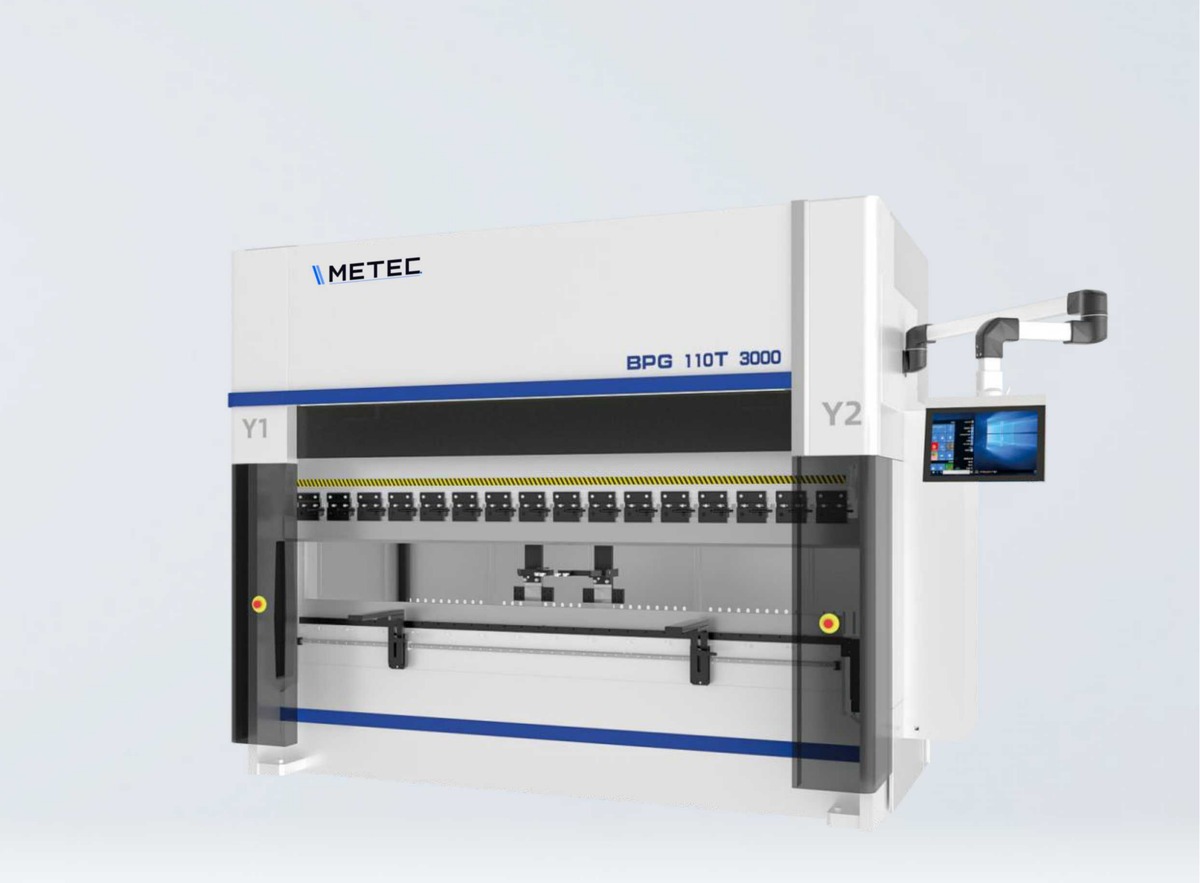
The most effective solution is a CNC press brake equipped with an integrated angle measurement system that measures the actual bend angle in real time and feeds the measurement back to the controller to adjust the ram position automatically.
Tooling Selection for Stainless Steel
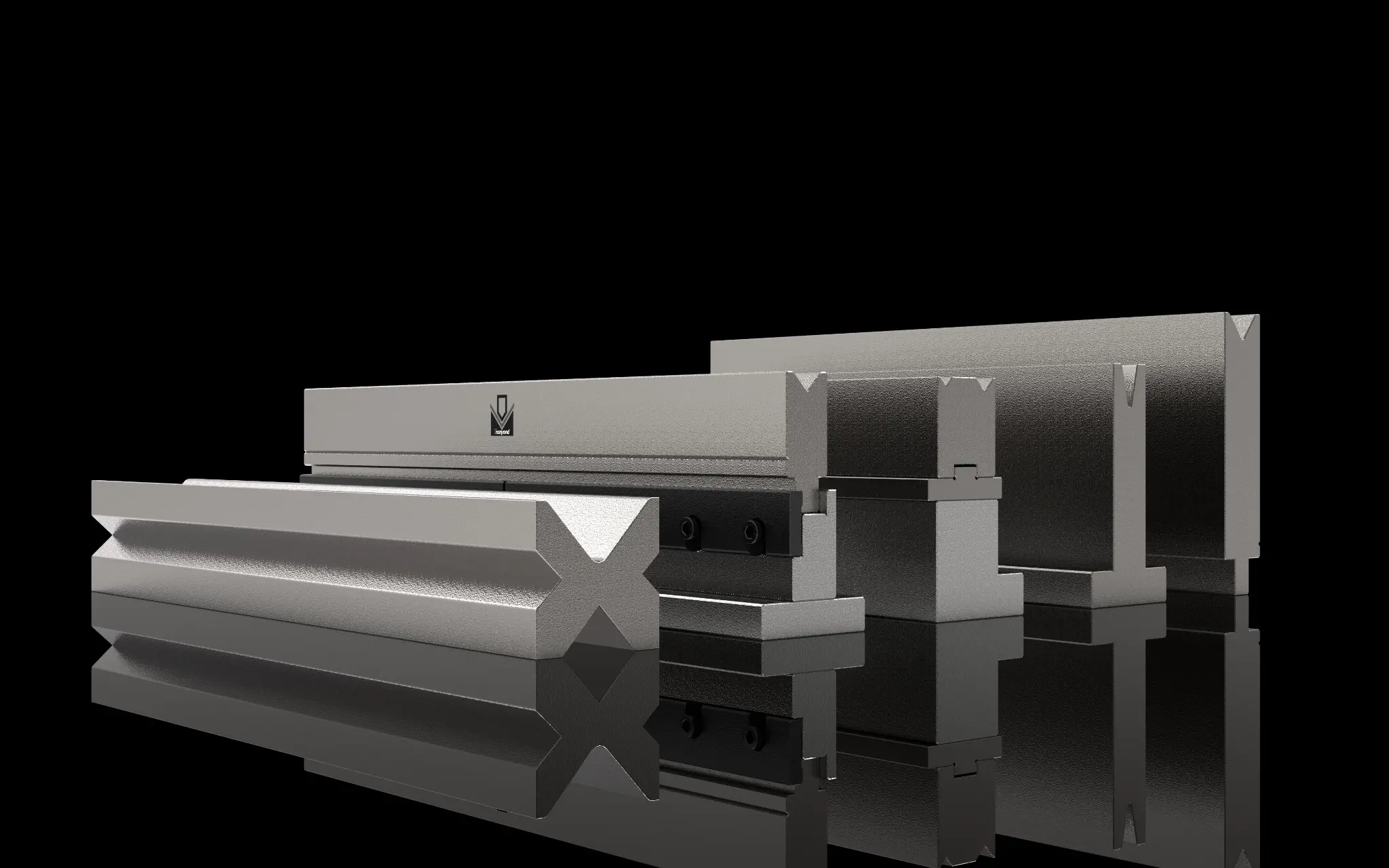
Key selection criteria include punch tip radius (larger radii reduce surface marking and cracking risk), die opening width, tooling surface finish (Ra 0.4 µm or better for finish-sensitive applications), and material hardness (58–62 HRC is recommended for high-volume stainless steel production).
FAQ
Q1: What is the typical springback angle for 2mm Grade 304 stainless steel in air bending?
Springback for 2mm Grade 304 in air bending typically ranges from 2 to 4 degrees, depending on the die opening and punch radius.
Q2: Can I use standard mild steel tooling for stainless steel bending?
Standard mild steel tooling can be used for occasional stainless steel bending, but it will wear faster and is more likely to leave surface marks. Hardened tooling with a polished surface finish is strongly recommended for regular stainless steel production.
Q3: How do I prevent the protective PVC film from tearing during bending?
Use a film with a minimum thickness of 0.05mm and ensure it is applied without air bubbles. Avoid bending at temperatures below 10°C.
Q4: What CNC press brake features are most important for stainless steel production?
The most valuable features are: real-time angle measurement, programmable bending speed, and a crowning system to compensate for beam deflection on long bends.
Q5: Is electric or hydraulic press brake better for stainless steel?
Servo-electric press brakes offer a precision advantage for stainless steel bending because their position control is not affected by hydraulic fluid temperature changes.
Get Expert Tooling Advice
Metec's engineering team has extensive experience configuring press brake and tooling systems for stainless steel fabrication across elevator, kitchen equipment, medical, and architectural applications.
Send Us Your Drawing — Get a Tooling Recommendation from Metec → [metecmt.com/contact](https://www.metecmt.com/contact)
Metec Engineering Team
Application EngineeringMetec's Application Engineering Team consists of senior engineers with hands-on experience commissioning and optimizing fiber laser cutting machines and CNC press brakes across 50+ countries. Our engineers hold degrees in mechanical engineering and have field experience with thousands of machine installations.