The right tooling selection can make or break your press brake operation. This comprehensive guide covers punch and die selection for common bending applications.
Why Tooling Selection Is Critical
Even the most advanced CNC press brake will produce poor results with incorrect tooling. Tooling selection affects bend quality, machine tonnage requirements, tooling lifespan, and operator safety.
Understanding the Basics
Punch Geometry
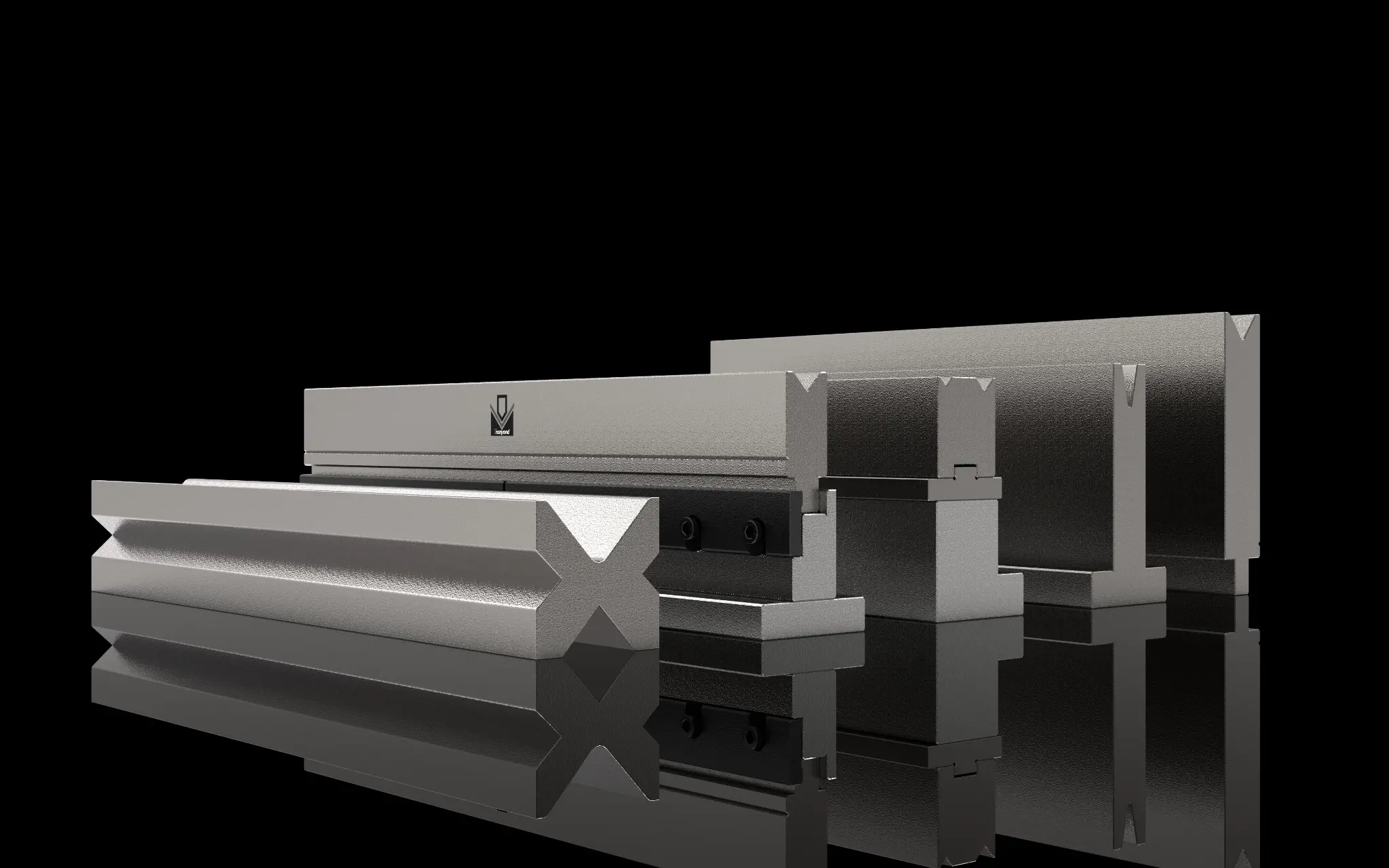
The punch tip angle determines the minimum bend angle achievable. Common punch types include:
- Standard punch (88°): General-purpose bending for most applications
- Acute punch (30°): For tight radius bends and hemming operations
- Gooseneck punch: For box and pan bending where the punch must clear the workpiece
- Radius punch: For large-radius bends in decorative or structural applications
Die Opening
The die opening (V-width) is the most critical die selection parameter. The general rule:
V-width = Material thickness × 8 (for carbon steel)
V-width = Material thickness × 6 (for stainless steel)
Smaller V-widths produce tighter bend radii but require more tonnage. Larger V-widths reduce tonnage but increase bend radius.
Tonnage Calculation
Required tonnage per meter of bend length:
T = (C × t² × Rm) / V
Where:
- C = constant (approximately 1.33 for 90° bends)
- t = material thickness (mm)
- Rm = tensile strength (MPa)
- V = die opening (mm)
Common Mistakes to Avoid
- •Using too small a die opening: Increases tonnage requirements and risk of tooling damage
- •Mismatched punch and die angles: Causes springback inconsistency
- •Ignoring material tensile strength variation: Batch-to-batch variation in steel can affect bend angles
- •Insufficient tooling maintenance: Worn punch tips cause inconsistent bend radii
Metec Tooling Recommendations
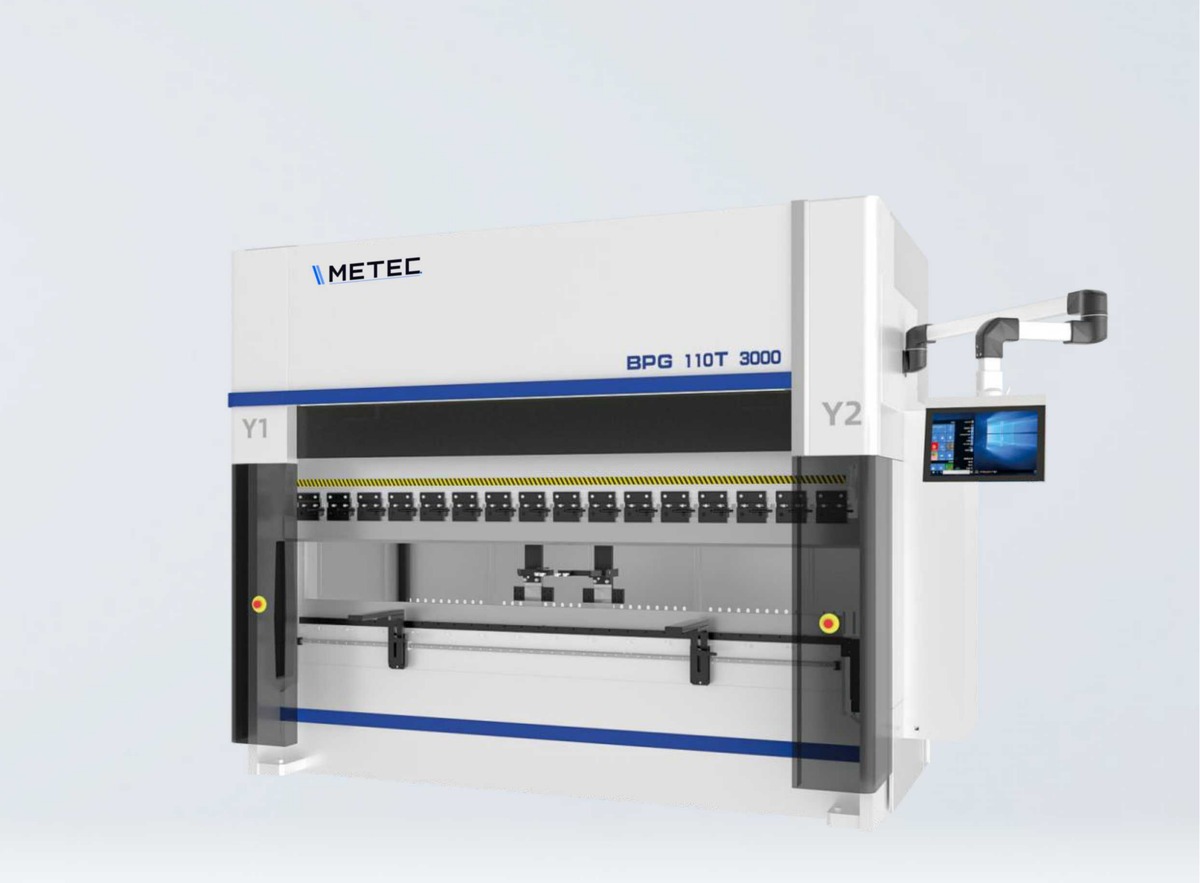
All Metec press brakes are compatible with standard European-style tooling (Wila/Trumpf style). We recommend Wila New Standard tooling for its precision and quick-change capability, which reduces setup time by up to 60% compared to traditional clamping systems.
Metec Engineering Team
Application EngineeringMetec's Application Engineering Team consists of senior engineers with hands-on experience commissioning and optimizing fiber laser cutting machines and CNC press brakes across 50+ countries. Our engineers hold degrees in mechanical engineering and have field experience with thousands of machine installations.