The global laser cutting machines market is projected to reach USD 14.3 billion by 2035 at a CAGR of 7.6%. This comprehensive buyer's guide covers laser power selection, machine format, automation features, and certification requirements to help you make the right investment.
Step 1: Determining the Optimal Laser Power
The most fundamental decision when configuring a fiber laser is selecting the correct power source. Power directly dictates two critical parameters: the maximum material thickness the machine can pierce and cut, and the cutting speed at a given thickness.
The Power Spectrum
In 2026, commercial fiber lasers typically range from entry-level 3kW systems up to ultra-high-power 30kW+ behemoths. For 3kW to 6kW systems (the versatile workhorses), these machines are ideal for job shops processing a high mix of thin to medium-gauge materials. A 6kW system, like those available in the [Metec MLS Series](/products/sheet-metal-laser/mls-series), is often considered the sweet spot for general fabrication. It easily handles carbon steel up to 25mm and stainless steel up to 20mm, while offering exceptional cutting speeds (up to 35 m/min) on 3mm sheet metal. Furthermore, 6kW systems consume 30-40% less electricity than older CO2 lasers.
For 12kW to 20kW systems (the heavy production standard), moving to a 12kW or 20kW system, such as the [Metec MLSD Series](/products/sheet-metal-laser/mlsd-series), not only increases the maximum thickness threshold but dramatically accelerates processing times on medium-thickness plates, often doubling the throughput of a 6kW machine.
For 30kW and beyond (the heavy industry titans), these ultra-high-power systems can cleanly cut carbon steel up to 60mm and stainless steel up to 80mm, effectively replacing plasma and oxy-fuel cutting processes and delivering weld-ready edges that eliminate the need for secondary grinding.
Making the Decision
When selecting power, analyze your core production data. Identify the material thicknesses that make up 80% of your volume, and size the laser to process that core volume at maximum efficiency. For a deeper dive into this specific topic, consult our detailed [guide on choosing the right fiber laser power](/blog/how-to-choose-right-fiber-laser-power-for-your-application).
Step 2: Selecting the Right Machine Format and Bed Size
The physical footprint and structural design of the machine are just as critical as the laser source. The format must align with your raw material supply and floor space constraints.
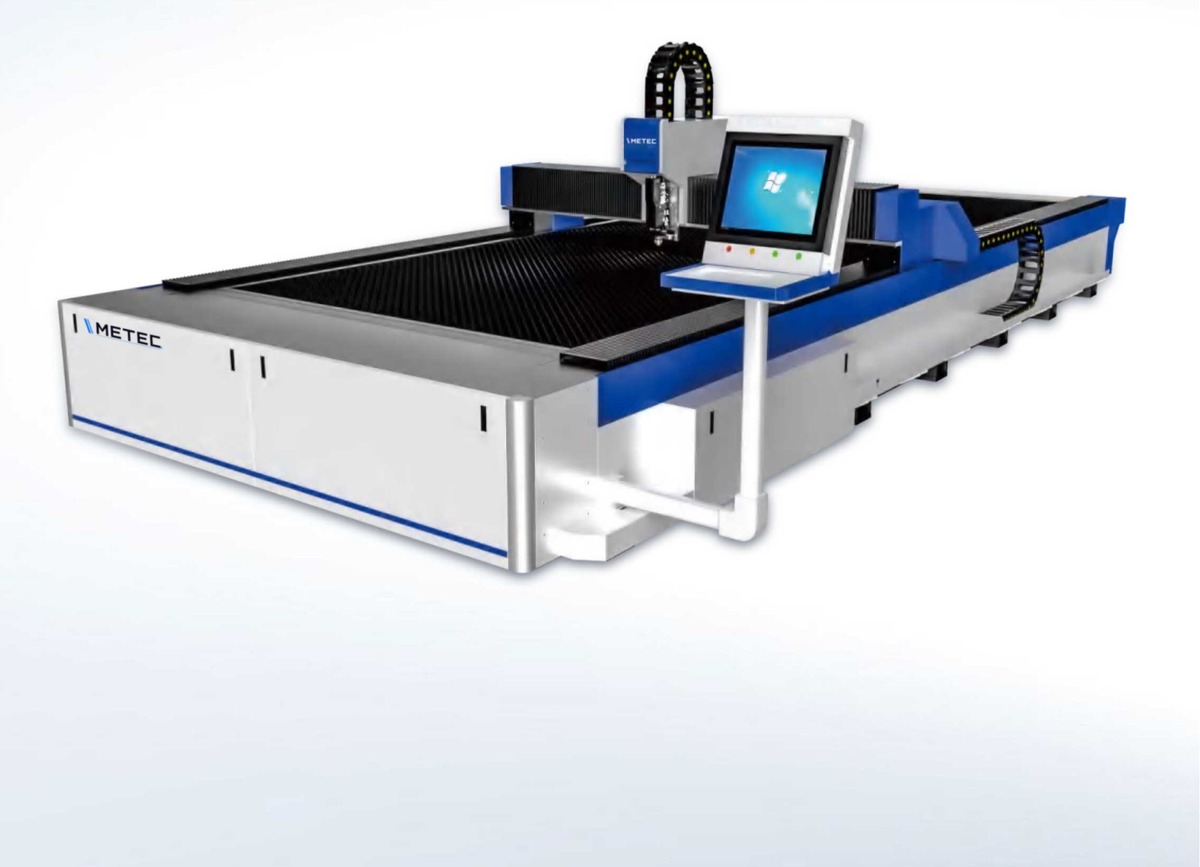
For the vast majority of sheet metal applications, a dual-pallet exchange table is the standard. Machines like the [Metec MLSF Series](/products/sheet-metal-laser/mlsf-series) utilize heavy-duty exchange tables capable of swapping in under 15 seconds, minimizing machine idle time.
If your production involves oversized plates, structural panels, or components for the transportation and energy sectors, large format machines such as the [Metec MLG Series](/products/sheet-metal-laser/mlg-series) offer cutting areas extending up to 13,000mm × 3,000mm or larger. These systems utilize a robust gantry structure and heavy-duty rack-and-pinion drives to maintain precision across massive spans.
Step 3: Evaluating Automation and AI Integration
As the industry faces persistent skilled labor shortages, automation is the key to unlocking the full potential of a modern fiber laser. Investing in automated material handling can increase overall equipment effectiveness (OEE) from a typical 50% to over 85%.
The integration of Artificial Intelligence is the defining trend of 2026. Modern CNC controllers now feature AI-assisted programming that optimizes nesting layouts to maximize material yield. Advanced cutting heads are equipped with intelligent sensors that monitor the cutting process in real-time, automatically pausing the machine or adjusting parameters if a potential collision or quality drop is detected. This predictive maintenance and adaptive control significantly reduce downtime and scrap rates.
Step 4: Ensuring Precision and Structural Rigidity
A fiber laser is a high-precision optical instrument mounted on a heavy industrial chassis. The machine must move a cutting head weighing several kilograms at speeds exceeding 120 m/min, while accelerating at 1.5G to 2G, all while maintaining absolute accuracy.
High-quality machines utilize heavily reinforced, thermally stress-relieved steel plate welded beds or cast iron frames. This massive structural rigidity absorbs vibration, allowing the servo motors and linear guides to achieve positioning repeatability of ±0.01mm—a standard benchmark across all Metec laser cutting systems.
Step 5: After-Sales Support and Certification
A fiber laser cutting machine is a major capital investment that will serve as the heartbeat of your production facility. Before purchasing, verify that the manufacturer adheres to strict international quality standards. Metec's production facilities are ISO 9001 certified, ensuring rigorous quality control at every stage of manufacturing. Metec machines are fully CE and SGS certified, guaranteeing compliance with stringent European and global safety directives, including proper laser enclosure shielding and safety interlock systems.
Metec provides comprehensive 24/7 multilingual support, ensuring that expert application engineers are always available to assist with programming questions, cutting parameter optimization, or troubleshooting. Rapid access to spare parts, such as protective lenses, nozzles, and ceramic rings, is crucial for keeping your production running without interruption.
FAQ
Q1: What is the difference between a single table and an exchange table fiber laser?
A: A single table machine requires the laser to stop cutting while the operator manually removes finished parts and loads a new sheet. An exchange table system features two pallets; the machine cuts on one while the operator unloads/loads the other, virtually eliminating machine idle time and drastically increasing daily throughput.
Q2: Can a fiber laser cut reflective materials like copper and brass?
A: Yes. Unlike older CO2 lasers, the 1.06µm wavelength of a fiber laser is highly absorbed by reflective metals. Fiber lasers excel at cutting aluminum, copper, brass, and galvanized steel with high speed and excellent edge quality, without the risk of back-reflection damaging the oscillator.
Q3: How often do I need to replace consumables on a fiber laser?
A: The primary consumables are cutting nozzles, protective lenses (cover glasses), and assist gas (Nitrogen or Oxygen). Nozzles and protective lenses may need replacement every few days to a few weeks, depending on the cutting volume, material type, and laser power. The laser source itself (the diodes) typically has an operational lifespan exceeding 100,000 hours.
Q4: Do I need a special foundation to install a fiber laser cutting machine?
A: Most standard format fiber lasers up to 12kW can be installed on a standard, level industrial concrete floor (typically 150mm to 200mm thick). However, ultra-high-power machines or large format gantry systems may require specialized reinforced concrete foundations to ensure absolute stability. Always consult the manufacturer's pre-installation guide.
Q5: What assist gas should I use for cutting stainless steel?
A: To maintain the corrosion resistance and achieve a clean, bright edge on stainless steel, high-pressure Nitrogen is the required assist gas. Using Oxygen on stainless steel will create an oxidized, blackened edge that must be chemically cleaned or ground off before welding or finishing.
Transform Your Production Capacity
Investing in the right fiber laser cutting machine will fundamentally transform your fabrication capabilities, driving down per-part costs while elevating quality and throughput.
Request a Free Quote from Metec → [metecmt.com/contact](https://www.metecmt.com/contact)
Metec Engineering Team
Application EngineeringMetec's Application Engineering Team consists of senior engineers with hands-on experience commissioning and optimizing fiber laser cutting machines and CNC press brakes across 50+ countries. Our engineers hold degrees in mechanical engineering and have field experience with thousands of machine installations.