Stainless steel's high yield strength and work-hardening characteristics make it notoriously difficult to bend accurately. This technical guide covers the six most common problems and their solutions for achieving perfect bends every time.
Understanding the Challenges of Stainless Steel
Before addressing specific problems, it is crucial to understand how stainless steel behaves under mechanical stress. The two most common grades used in fabrication are 304 and 316. Both are austenitic stainless steels, meaning they are highly ductile but possess a high work-hardening rate. As the material is bent, the area undergoing deformation becomes significantly harder and more brittle.
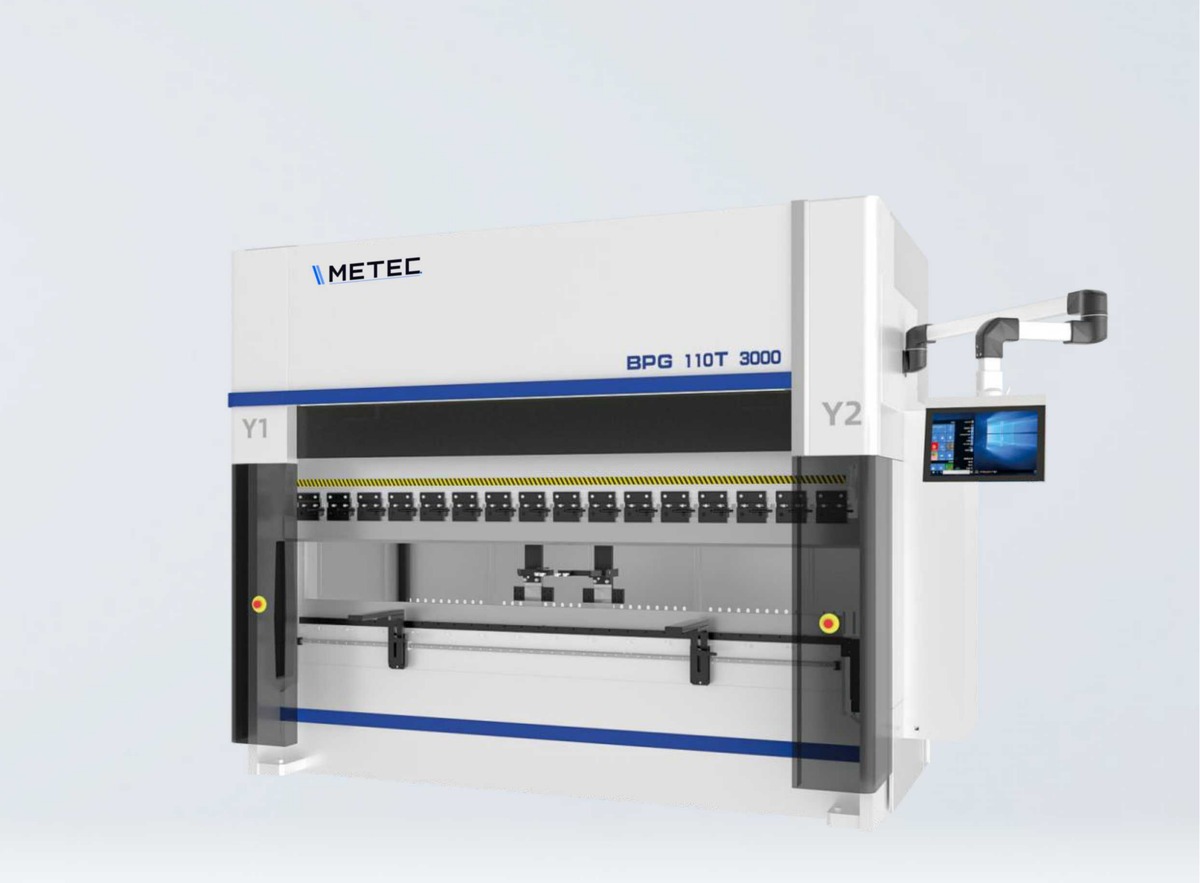
Furthermore, stainless steel requires considerably more bending force than mild steel of the same thickness—often 50% to 60% more tonnage. This increased force places immense stress on both the press brake and the tooling, amplifying any slight inaccuracies in the setup. For a complete overview of Metec's press brake product range, visit our [Press Brake Products](/products/press-brake) page.
Challenge 1: Managing Severe Springback
The Problem
Springback is the tendency of a metal to partially return to its original flat shape after the bending force is removed. Because stainless steel has a high yield strength and high elastic limit, it exhibits much greater springback than mild steel. If an operator programs a 90-degree bend, the material might spring back to 92 or 93 degrees once the ram retracts, resulting in an out-of-tolerance part.
The Solution
Compensating for springback requires a combination of overbending and advanced control technology. The most common approach is overbending: to achieve a final 90-degree bend in 304 stainless steel, the punch must typically drive the material to an 87- or 88-degree angle. Bottom bending or coining can significantly reduce springback but require substantially higher tonnage. The most effective modern solution is utilizing a CNC press brake equipped with an angle measurement system. Advanced controllers, such as the Delem DA-66T featured on the [Metec MPS Series](/products/press-brake/mps-series), use real-time sensors to measure the bend angle under load, calculate the exact springback coefficient, and automatically adjust the ram depth to achieve the perfect angle on the first try.
Challenge 2: Preventing Surface Scratches and Tool Marks
The Problem
Stainless steel is frequently chosen for its aesthetic qualities, particularly in architectural or food-grade applications where a brushed or polished finish is required. During the bending process, the sheet metal slides over the shoulders of the V-die under immense pressure. This friction can cause galling, deep scratches, and unsightly tool marks that ruin the surface finish and require expensive secondary polishing to repair.
The Solution
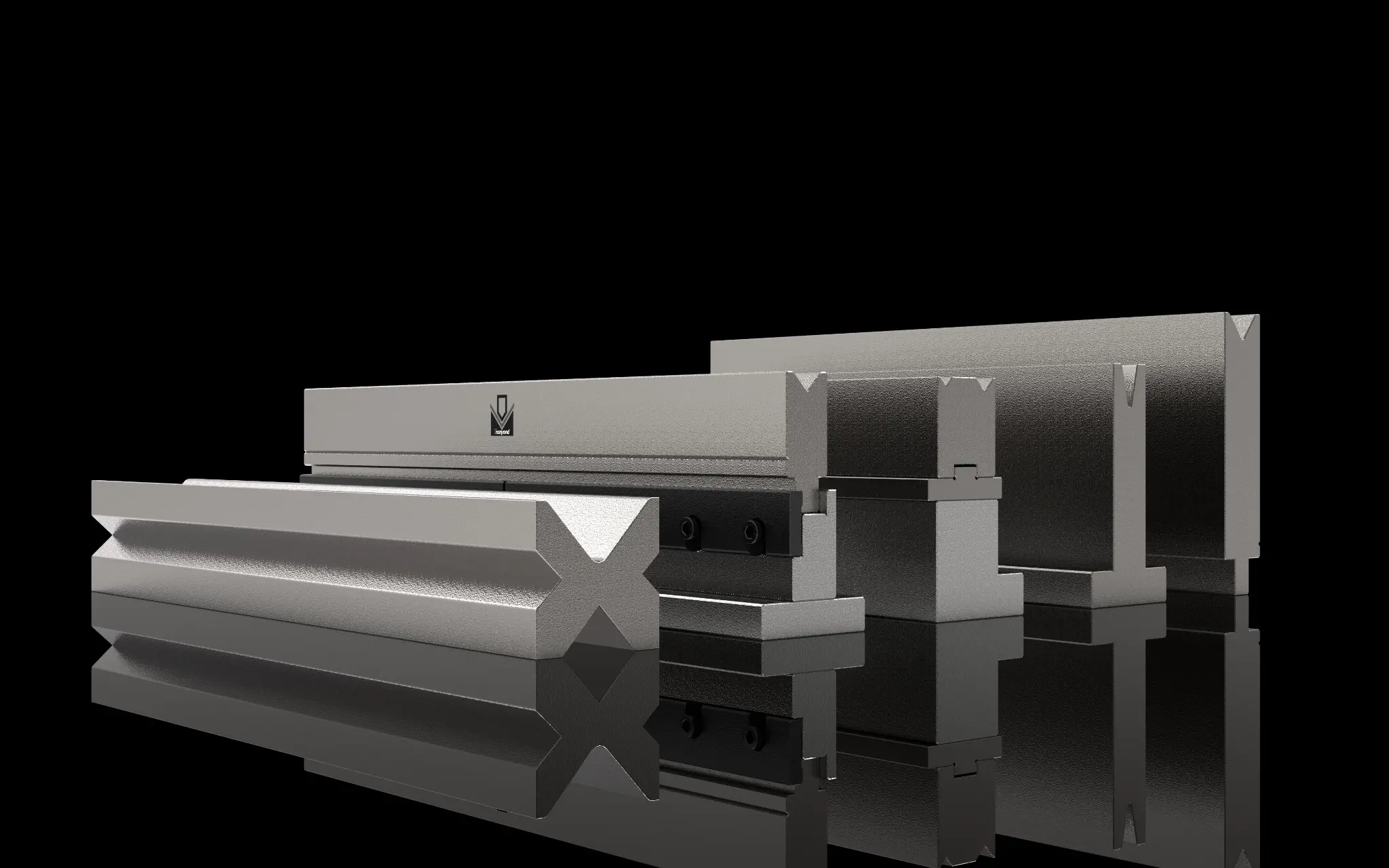
Protecting the surface finish requires minimizing friction and physical contact between the die and the material. Apply a heavy-duty polyurethane or PVC protective film to the stainless steel sheet before bending. Use dies with urethane inserts or urethane pads placed over standard steel dies. Upgrade to highly polished, hardened steel dies or dies with specialized low-friction coatings such as Nitride. Roller dies, which feature rotating cylinders at the die shoulders, allow the material to roll into the V-groove rather than drag, virtually eliminating friction marks.
Challenge 3: Avoiding Cracking at the Bend Radius
The Problem
When bending thick stainless steel or attempting to achieve a very tight bend radius, the outer surface of the bend undergoes extreme tension. If the tensile stress exceeds the material's ductility, the metal will fracture or crack along the bend line.
The Solution
Preventing cracking involves respecting the material's physical limits and understanding its grain structure. The inside bend radius should be at least equal to the material thickness (1T) for thinner gauges, and up to 1.5T or 2T for thicker plates. Bending parallel to the grain promotes cracking; whenever possible, parts should be nested so that the bend line runs perpendicular to the grain direction. For designs requiring a tight radius, consider specifying an annealed stainless steel, which has been heat-treated to maximize ductility.
Challenge 4: Controlling Part Distortion and Bowing
The Problem
When bending long, narrow profiles or large, thin panels, the material may bow or distort along the length of the bend. This is often caused by uneven pressure distribution, machine deflection, or the release of internal stresses within the stainless steel sheet.
The Solution
Maintaining straight, distortion-free bends on long parts requires precise machine calibration and structural support. Utilizing a CNC mechanical crowning system—standard on machines like the [Metec MPH Series](/products/press-brake/mph-series)—automatically adjusts the bed's curvature to counteract deflection, ensuring a perfectly straight bend across the entire length. For large, thin panels, CNC sheet followers support the material throughout the operation, preventing gravity-induced distortion.
The Importance of Machine Precision and Reliability
Successfully bending stainless steel is a demanding application that exposes the weaknesses of inferior equipment. Metec's commitment to engineering excellence ensures that our press brakes deliver the performance required for challenging materials. Our machines feature a positioning repeatability of ±0.01mm, providing the exact control necessary to manage stainless steel's narrow forming window. Furthermore, all Metec manufacturing facilities operate under strict ISO 9001 quality management systems, and our equipment is fully certified to CE and SGS standards, guaranteeing safety, reliability, and long-term durability.
Because we understand that downtime is costly, Metec backs all our equipment with comprehensive 24/7 multilingual support, ensuring that expert technical assistance is always available when you need it.
FAQ
Q1: What is the minimum inside bend radius for 304 stainless steel?
A: For standard 304 stainless steel, the recommended minimum inside bend radius is generally 1 times the material thickness (1T) for sheets up to 3mm thick. For material thicker than 3mm, a radius of 1.5T to 2T is recommended to prevent outer radius cracking.
Q2: Why does my stainless steel part bend to different angles on the same machine setting?
A: This inconsistency is usually caused by variations in the material's thickness or yield strength from batch to batch. Because stainless steel requires high bending force, even a 0.1mm variance in thickness significantly changes the springback profile. Using a CNC press brake with an active angle measurement system can automatically compensate for these material variations.
Q3: Can I use the same tooling for carbon steel and stainless steel?
A: While physically possible, it is highly discouraged. Carbon steel leaves microscopic iron particles on the tooling. When you subsequently bend stainless steel, these iron particles embed into the surface and will eventually rust, ruining the stainless steel's corrosion resistance. Always dedicate specific, clean tooling exclusively for stainless steel.
Q4: Does the bending speed affect stainless steel?
A: Yes. Because stainless steel work-hardens rapidly, bending too slowly can increase the work-hardening effect and exacerbate springback. Conversely, bending too fast can cause the material to fracture. A controlled, steady bending speed optimized via the CNC controller yields the best results.
Q5: How do I calculate the required tonnage for bending stainless steel?
A: Stainless steel generally requires 50% to 60% more tonnage than mild steel of the same thickness. To calculate the requirement, use a standard mild steel tonnage chart and multiply the result by 1.5 or 1.6. Always ensure your press brake and tooling are rated for this higher force to prevent equipment damage.
Master Stainless Steel Fabrication
Don't let springback, scratches, and cracking compromise your product quality or slow down your production. Upgrading to a precision CNC press brake equipped with advanced crowning and adaptive bending technology is the definitive solution for mastering stainless steel fabrication.
Request a Free Quote from Metec → [metecmt.com/contact](https://www.metecmt.com/contact)
Metec Engineering Team
Application EngineeringMetec's Application Engineering Team consists of senior engineers with hands-on experience commissioning and optimizing fiber laser cutting machines and CNC press brakes across 50+ countries. Our engineers hold degrees in mechanical engineering and have field experience with thousands of machine installations.